
building an open standard for music collections
because a party of one is not a party
It feels like a different world from when we started making Tangle a little over a year and a half ago. There is more fear, more of a sense of loss, as music streaming platforms continue to ‘combat silence’ and squeeze artists and creators.
But there is also hope to be found in randomness and playfulness as our feeds fill with people exploring and building musical experiments of all shapes and sizes. There are apps that let you B2B with your friend on the other side of the planet, visualize your tracks using a saturn disco ball and even custom mp3 players that you can clip to your hair.
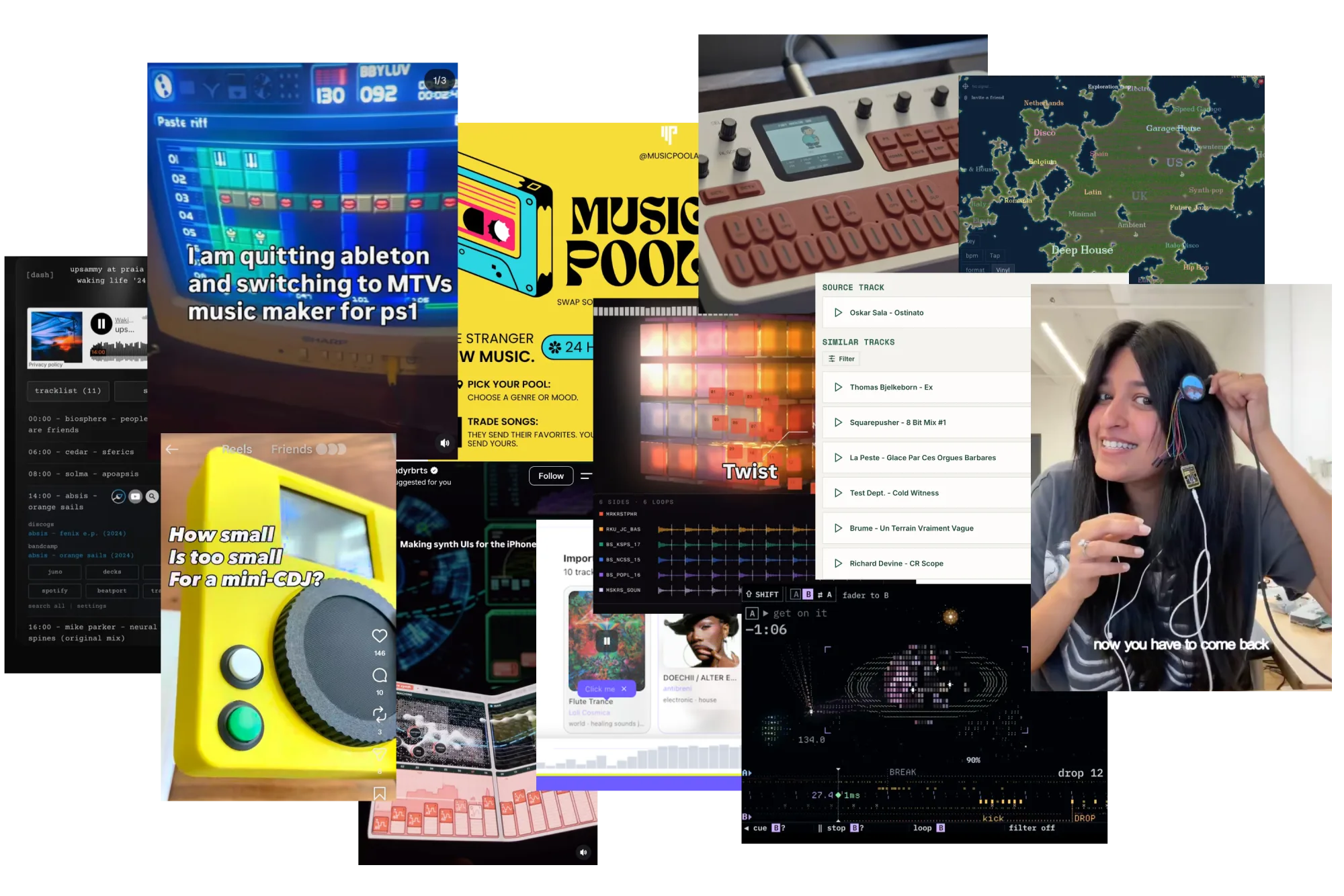
Ironically, both of these trends are accelerated by AI. The difference is the motivation behind the prompt. Is it shareholder value? Or is it the chance to change how we experience music, perhaps for a community or just yourself?
The changing economics of making stuff
Previously, building software used to be expensive, expensive enough that companies needed millions of users to make it viable. And when you’re building for millions of people, you tend to make things that are convenient and frictionless, not personal and emotive.
Music, however, is personal and emotive and deserves interfaces that allow people to experience it that way. People have always made music interfaces their own (custom Winamp skins anyone?), and niche apps have always existed alongside the big boys.
Now that threshold for creation has dropped and we are in a moment where anyone can experiment and build their ideas. What kind of apps will people make when they no longer have to make something for the largest possible audience? When someone can translate their method of classifying songs using the position of the stars into an interface that works just for them? When a Frisbee can also be a music player?
Not all of these will be slick, polished, or make sense to you, but they will make sense to whoever created them. And we are excited to see all the weird and wonderful things that might come out.
Personal and connected
As exciting as a world of unique and specialized music apps sounds, there is a problem.
Music is personal, but at the same time, the best music moments are ones that are shared. Imagine you’ve built your perfect music player and your friend has one of their own too. Your collections now live in completely separate worlds, and you can’t listen to your friend’s playlists, collaborate on a mixtape or send each other the latest bangers without jumping between apps. A party of one is not a party.
What we want instead is increasingly personal ways to experience music without losing the ability to experience it together. And to do that we need to create bridges between all of these separate and unique music worlds.
MIX (Music Information Exchange) is that bridge. It’s an open standard that gives music apps a shared language to exchange information about tracks, collections and playlists. With it, you can build a new music interface and let people play with their own collections inside of it, right from day one. It removes the friction of having to rebuild years worth of playlists or manage collections across apps.
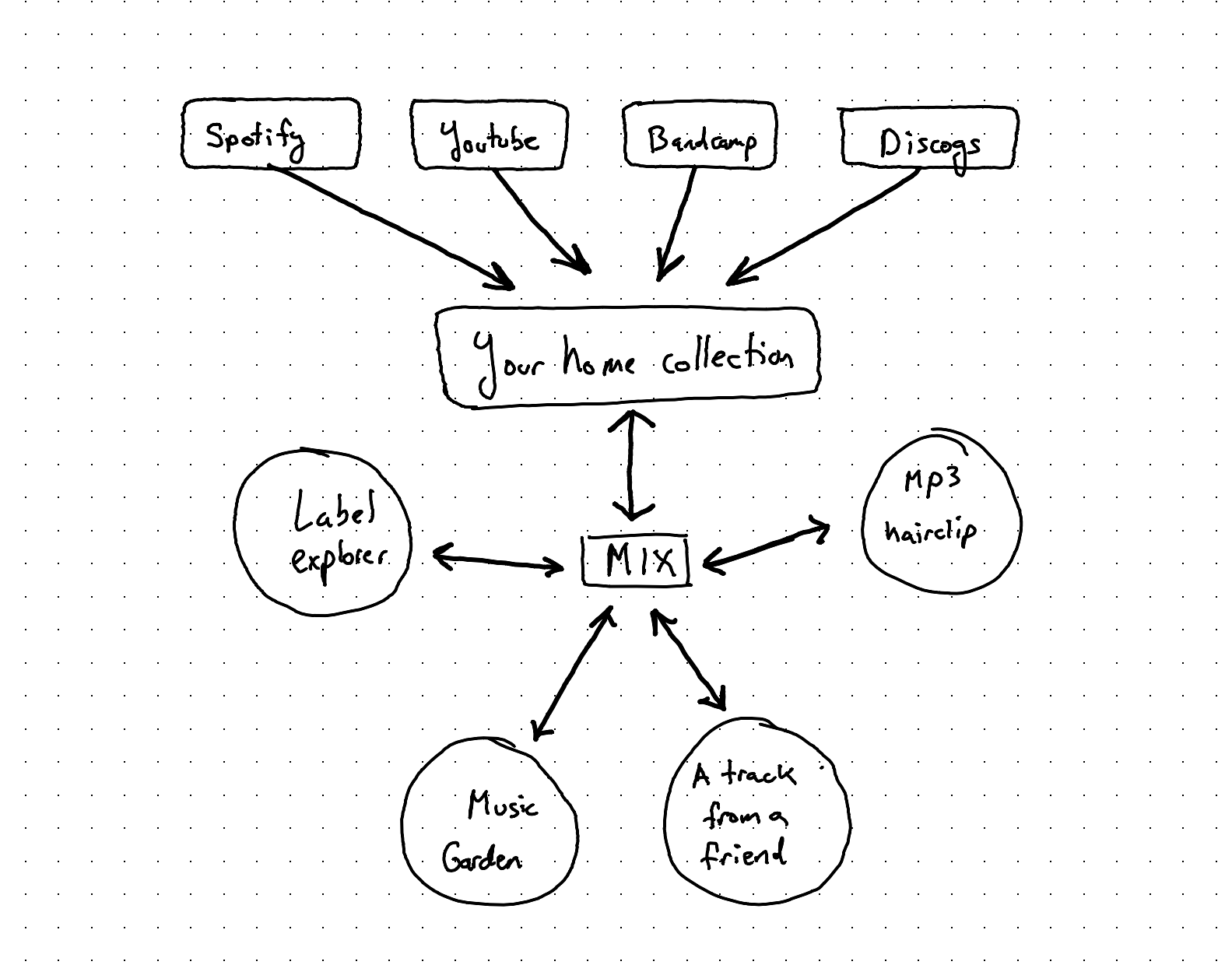
Creators can dream up new ways of experiencing music instead of building the underlying infrastructure to import and manage collections. We built this infrastructure for Tangle, and it took us over a year to get it right. We want others to avoid the same pain and have them focus on the fun stuff!
A stronger ecosystem
A widely-adopted standard also changes the way we think about the ecosystem of music apps. Right now, it feels like all of these vibe-coded apps are shouting and competing with each other for your eyeballs, your time and your money.
Despite all the fun new apps on our feeds, there is still a sense that they are adhering to the old rules of building software and monetizing it, and they’re holding us back. Creators spend time rebuilding features that already exist elsewhere and fighting for your attention. Consumers can’t easily try different apps without losing their carefully curated collections and are drowning in a sea of mediocrity.
A shared standard changes these underlying incentives. We move from a winner takes all world to an ecosystem of apps that find their niche and work together. The future of music software doesn’t have to be a few competing platforms. It can be thousands of small apps that each do one thing really well, connected through a shared language.
And the more apps that adopt MIX, the stronger its ecosystem becomes for everyone.
Play with us
MIX is still a work in progress. We have some ideas about how it should work, but we’re much more interested in finding out how others use it. If you’re making a music app, we would love for you to try MIX, tell us what’s missing, and help iterate and improve it.
We’ve put together an early specification at tangle.music/mix. It’s a starting point, a step towards a future where anyone can create their own little corner of the music world without being cut off from everyone else’s.
Come shape that future with us. Let’s play.